 Pokerzin
Texas Hold'em is the most played poker variant in the world. Each player gets two face-down cards that only they can see, and the table reveals five community cards that everyone shares. The winner is whoever makes the best five-card hand using any combination of the seven available cards (your two plus the five on the board), or whoever makes everyone else fold before that.
It sounds simple, and it is: the rules fit on one page. What makes the game interesting is that you decide with incomplete information. You don't know the other players' cards, they don't know yours, and every bet tells a story that may or may not be true.
What you need to know before your first hand
- Deck: 52 cards, no jokers. The ranks go from 2 (lowest) up to Ace (highest). The Ace also counts as 1 in the straight A-2-3-4-5.
- Suits: spades, hearts, diamonds and clubs all have the same value. No suit beats another.
- Chips: each player sits down with an amount of chips (the stack) and can only bet what is in front of them during that hand.
- Button (dealer): a marker moves around the table, one seat per hand, clockwise. It decides who pays the blinds and who acts last.
1. The blinds
Before the cards are dealt, the two players to the left of the button post forced bets. The first one pays the small blind and the second pays the big blind, usually twice as much. At a 10/20 table, for example, that's 10 and 20 chips.
The blinds exist so there is always something to fight for. Without them, everyone could wait for perfect hands and the game would never move. Since the button rotates, every player pays the blinds once per orbit of the table.
2. Hole cards and preflop
Each player gets two face-down cards. Then the first betting round begins: preflop. The player to the left of the big blind acts first, and the action moves clockwise. Each player chooses to:
- Fold: throw the cards away and leave the hand. Whatever they already bet stays in the pot.
- Call: match the biggest bet of the round. Preflop, that's at least the size of the big blind.
- Raise: put in more than the biggest bet, so the others have to pay the new amount to stay in.
The big blind acts last preflop. If nobody raised, they can check, because they have already paid the amount for the round.

3. The flop
When the preflop round ends, the table reveals three community cards at once: the flop. From here on, the first player still in the hand to the left of the button acts first. A new option appears in this round:
- Check: if nobody has bet yet this round, you can pass without putting in chips.
- Bet: be the first to put chips in during the round.
If someone bets, the others go back to the earlier options: fold, call or raise.
4. The turn and the river
After the flop comes the fourth community card, the turn, with another betting round. Finally, the fifth card, the river, and the last round. The rules for each round are the same as on the flop.
A round only ends when everyone still in the hand has put in the same amount of chips, or when only one player is left. If everyone checks, the round ends and the next card is revealed.
5. The showdown
If two or more players are still in after the river, the cards are turned over: that's the showdown. Each player makes the best five-card hand from the seven available. You may use both hole cards, just one, or none (in that case, you are "playing the board").

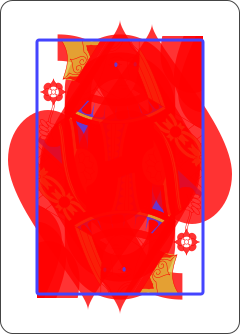


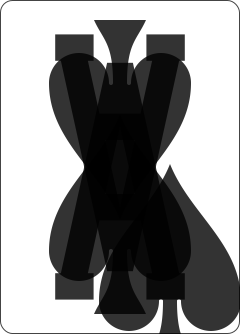
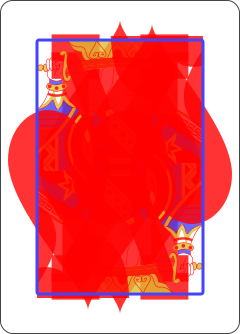
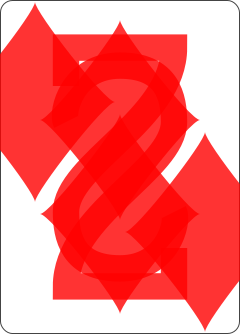
In the example above, the two hearts in your hand combine with the three on the board: Ace, King, Queen, 9 and 2, all hearts. That's an Ace-high flush. To see what beats what, check the poker hand rankings.
If two players have exactly the same five-card hand, the pot is split. When the hand is the same but the other cards differ (for example, two players with a pair of Kings), the highest remaining card decides: the kicker.
No-Limit: how much you can bet
The most common form of Hold'em is No-Limit, which is what Pokerzin uses. You can bet any amount, from the minimum up to all your chips, the famous all-in. There are only two sizing rules:
- The minimum bet is the size of the big blind.
- A raise must be at least as big as the previous raise. If someone bet 20 and another player raised to 60 (40 more), the next raise has to go to at least 100.
A player who goes all-in with fewer chips than the bet keeps competing for the part of the pot they could cover. The rest becomes a side pot among the others. This is explained in All-in and side pots.
A hand in short
- Blinds posted and two cards for each player.
- Preflop: a betting round, starting to the left of the big blind.
- Flop: three cards on the board and a betting round.
- Turn: the fourth card and a betting round.
- River: the fifth card and the last round.
- Showdown: the best five-card hand takes the pot.
A hand can end at any moment: if someone bets and everyone else folds, the bettor takes the pot without showing their cards. That's where bluffing comes from.